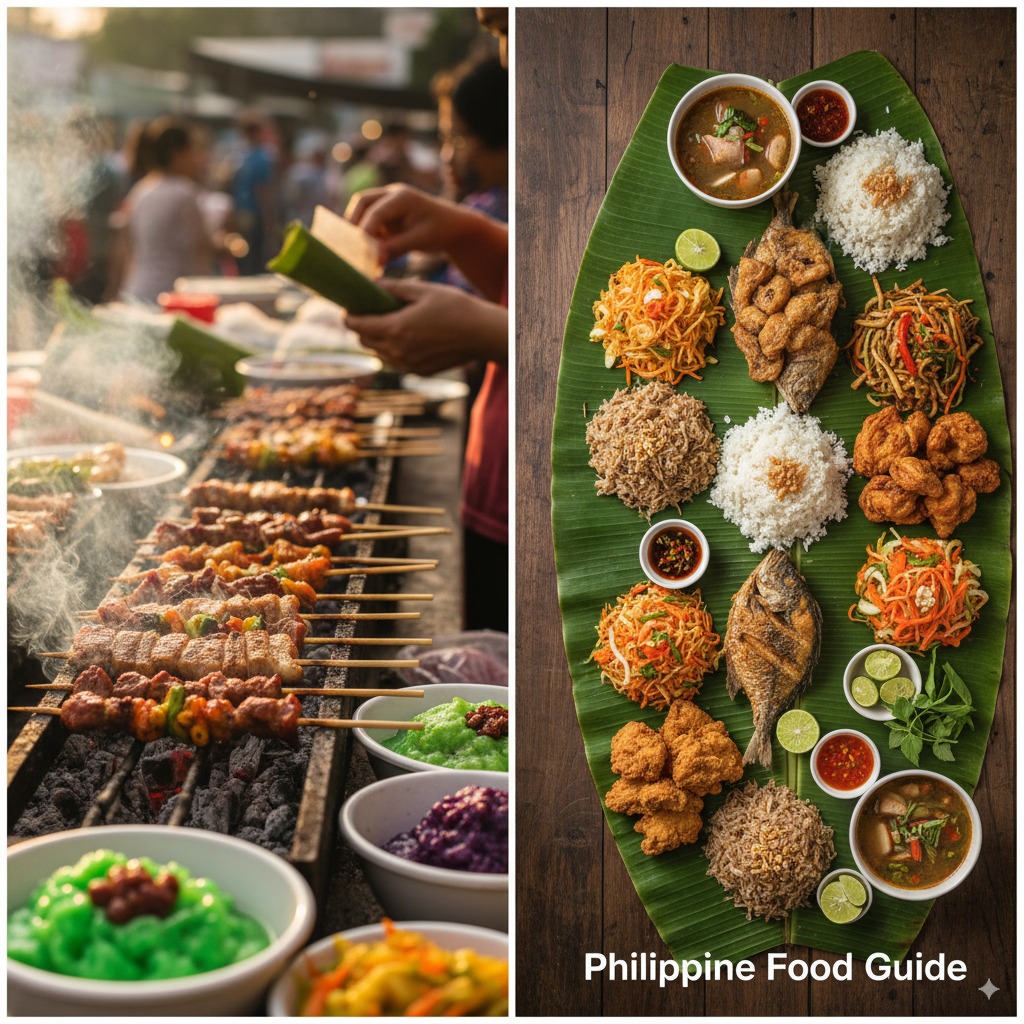
Philippine cuisine is a vibrant tapestry woven from centuries of cultural influences, indigenous traditions, and island-specific ingredients. Born from the marriage of Malay, Chinese, Spanish, American, and indigenous cooking techniques, Filipino food offers bold flavors, hearty comfort dishes, and unique combinations that might surprise and delight international palates.
From the world-famous adobo to lesser-known regional specialties, Philippine cuisine celebrates balance – sweet meets salty, sour complements rich, and simple ingredients transform into complex, satisfying meals. This comprehensive guide will take you through the essential dishes, ingredients, and food experiences that define Filipino culinary culture.
Adobo - The National Dish

Considered the Philippines' national dish, adobo features meat (typically chicken, pork, or both) braised in vinegar, soy sauce, garlic, and black peppercorns. The dish varies significantly by region, with some versions adding coconut milk, different types of vinegar, or unique local ingredients.
Lechon - The King of Filipino Celebrations

A whole pig roasted over charcoal until the skin becomes perfectly crispy while the meat remains juicy and flavorful. Lechon is the centerpiece of Filipino celebrations and is often considered the ultimate test of a Filipino cook's skill. Cebu is particularly famous for its lechon.
Sinigang - The Soul-Warming Soup
This beloved sour soup is typically made with tamarind, tomatoes, and various vegetables with either pork, beef, fish, or shrimp. The signature tangy flavor comes from souring agents like tamarind, calamansi, or green mango. It's considered comfort food that brings families together.
Kare-Kare - The Royal Stew
A rich, thick stew made with oxtail, vegetables, and a signature peanut-based sauce. The dish is traditionally served with bagoong (fermented shrimp paste) and is considered one of the most sophisticated dishes in Filipino cuisine, often reserved for special occasions.
Luzon Favorites
- • Sisig (Pampanga): Sizzling chopped pig face and liver
- • Pancit Habhab (Lucban): Stir-fried noodles on banana leaf
- • Longganisa (various): Regional sausages with unique flavors
- • Pinakbet (Ilocos): Mixed vegetable stew with bagoong
- • Bagnet (Ilocos): Deep-fried crispy pork belly
Visayas Delights
- • La Paz Batchoy (Iloilo): Rich noodle soup with organs
- • Lechon Cebu: The Philippines' best roasted pig
- • Chicken Inasal (Bacolod): Grilled chicken with annatto
- • Puso (Cebu): Rice cooked in woven coconut leaves
- • Humba (Visayas): Sweet braised pork belly
Mindanao Specialties
- • Durian: The controversial "king of fruits"
- • Sinuglaw: Grilled pork belly with kinilaw (ceviche)
- • Pastil (Maguindanao): Rice with shredded chicken in banana leaf
- • Tuna dishes: Fresh tuna prepared various ways
- • Halaan soup: Clam soup with ginger and lemongrass
Street Food Classics
- • Balut: Fertilized duck egg (adventure food!)
- • Isaw: Grilled chicken intestines
- • Fish ball: Deep-fried fish balls with sauce
- • Taho: Soft tofu with syrup and tapioca pearls
- • Halo-halo: Shaved ice dessert with mixed toppings
The "Silog" Phenomenon
Filipino breakfast often follows the "silog" format: a combination of garlic fried rice (sinangag), fried egg (itlog), and a protein. The name combines the protein with "silog" (sinangag + itlog).

Tapsilog
Tapa (cured beef) + silog

Longsilog
Longganisa (sausage) + silog
Bangsilog
Bangus (milkfish) + silog
Traditional Desserts
- • Halo-halo: Layered shaved ice dessert with various toppings
- • Leche flan: Filipino version of crème caramel
- • Biko: Sticky rice cake with coconut caramel
- • Ube halaya: Purple yam pudding
- • Taho: Soft tofu with brown sugar syrup
Regional Sweet Specialties
- • Buko pie (Laguna): Young coconut pie
- • Turrones de casuy (Silay): Cashew candy rolls
- • Bibingka (various): Rice cake with cheese and salted egg
- • Suman: Sticky rice wrapped in banana leaves
- • Maja blanca: Coconut pudding with corn kernels
Must-Try Sweet Experiences
Afternoon snack time featuring kakanin (rice cakes), pandesal (bread rolls), and coffee or hot chocolate
Special occasion desserts like leche flan, ube cake, and various coconut-based delicacies served during celebrations
Coffee Culture
The Philippines is one of the few countries that produce all four commercial coffee varieties. Filipino coffee culture includes both traditional and modern preparations, with local coffee shops becoming increasingly popular.
- • Barako coffee: Strong Liberica variety
- • Kapeng Alamid: Civet coffee (very expensive)
- • Local coffee shops: Bo's Coffee, Figaro, etc.
Traditional Beverages
- • Calamansi juice: Filipino lime juice
- • Buko juice: Fresh coconut water
- • Sago't gulaman: Tapioca and gelatin drink
- • Tsokolate: Thick hot chocolate
- • Salabat: Ginger tea
Alcoholic Beverages
- • San Miguel Beer: National beer brand
- • Lambanog: Coconut wine/vodka
- • Tuba: Fresh coconut wine
- • Tanduay Rum: Popular local rum
- • Rice wine: Traditional fermented rice drink
Modern Filipino Drinks
- • Milk tea culture: Various Asian-inspired flavors
- • Fresh fruit shakes: Mango, avocado, melon
- • Craft cocktails: Using local ingredients
- • Specialty coffees: Third-wave coffee movement
Eating Customs
- • Kamayan: Eating with hands (traditional)
- • Shared meals: Food placed in center, everyone shares
- • Rice staple: Rice accompanies almost every meal
- • Mano gesture: Respect to elders before eating
- • Pakimkim: Taking food home is encouraged
Meal Timing
- • Almusal: Breakfast (6-8 AM)
- • Tanghalian: Lunch (11 AM-1 PM)
- • Merienda: Afternoon snack (3-4 PM)
- • Hapunan: Dinner (6-8 PM)
- • Late-night snack: Common cultural practice
Food Safety Tips for Travelers
- • Start with milder dishes if you're not used to bold flavors
- • Choose busy, popular restaurants for street food
- • Drink bottled water or properly boiled water
- • Try local fruits but wash them properly
- • Ask about spice levels - Filipino food can be quite salty/sweet
- • Respect cultural dishes even if they seem unusual
Food Markets & Street Food
- • Mercato Centrale (BGC): Weekend gourmet market
- • La Loma (Manila): Lechon capital
- • Dampa seafood markets: Fresh seafood, various locations
- • Night markets: Baguio, Iloilo, various cities
Fine Dining Filipino
- • Toyo Eatery: Modern Filipino cuisine
- • Locavore: Contemporary Filipino dishes
- • Gallery by Chele: Filipino ingredients, modern techniques
- • Hey Handsome: Elevated comfort food
Regional Food Destinations
- • Pampanga: Culinary capital, sisig birthplace
- • Iloilo: Batchoy and seafood paradise
- • Cebu: Lechon and street food scene
- • Bicol: Spicy dishes with coconut milk
Food Tours & Experiences
- • Manila food walks: Binondo, Malate districts
- • Cooking classes: Learn to make traditional dishes
- • Market tours: Learn about local ingredients
- • Farm-to-table experiences: Rural cooking experiences
Embark on Your Filipino Food Adventure
Let our AI travel planner create a personalized culinary journey through the Philippines, featuring the best regional dishes, food markets, and authentic dining experiences tailored to your taste preferences and dietary needs.
Plan My Food Adventure