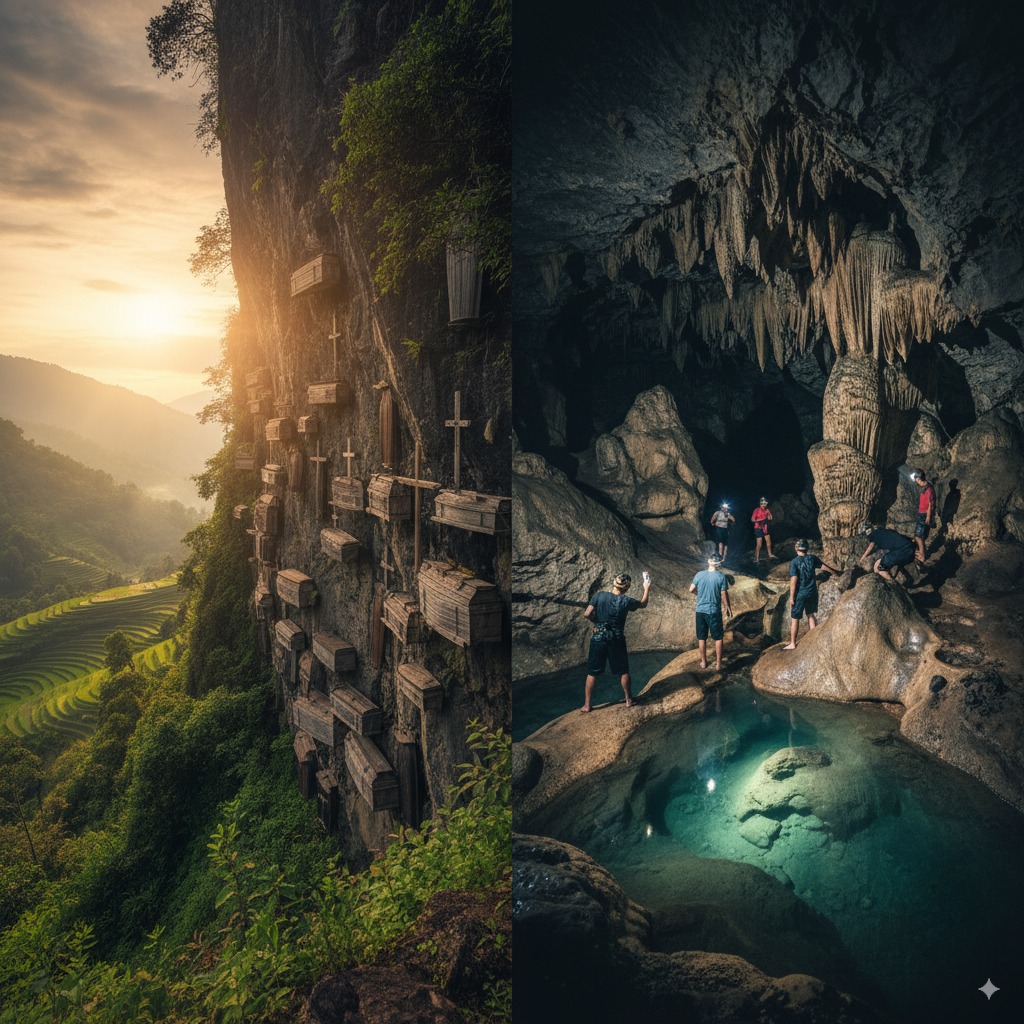
Hidden in the mountains of Mountain Province in northern Luzon, Sagada is a mystical destination that offers visitors a glimpse into ancient Filipino burial traditions, breathtaking mountain landscapes, and a culture that has remained largely untouched by modern development. This small town of around 11,000 residents has become a pilgrimage site for travelers seeking authentic cultural experiences and natural wonders.
From the famous hanging coffins that cling to limestone cliffs to the spectacular sea of clouds at sunrise, Sagada provides an otherworldly experience that combines spiritual awakening with adventure tourism. The town's commitment to preserving its indigenous Igorot culture while welcoming respectful visitors makes it one of the Philippines' most unique and memorable destinations.
Mountain Climate
- • Elevation: 1,500 meters above sea level
- • Temperature: 15-24°C (59-75°F)
- • Dry Season: November to April
- • Wet Season: May to October
- • Coolest: December to February
What to Pack
- • Warm jacket for early morning/evening
- • Sturdy hiking boots
- • Rain gear (wet season)
- • Flashlight for cave exploration
- • Respectful clothing for cultural sites
Hanging Coffins (Echo Valley)

Sagada's most famous attraction, these ancient wooden coffins hang precariously from limestone cliffs, following a centuries-old Igorot burial tradition. According to local belief, the higher the coffin, the closer the deceased is to heaven. Some coffins are over 2,000 years old.
Kiltepan Peak (Sea of Clouds)
Wake up before dawn for a challenging 30-45 minute hike to Kiltepan Peak to witness one of the Philippines' most spectacular sunrises. On clear mornings, you'll see a breathtaking sea of clouds flowing between mountain peaks like a white ocean.
Sumaguing Cave (Big Cave)

Sagada's most accessible and popular cave system features impressive limestone formations, underground chambers, and crystal-clear pools. The adventure involves crawling, climbing, and swimming through various cave sections with a local guide.
Lumiang Burial Cave
This sacred cave contains hundreds of ancient coffins stacked from floor to ceiling, some dating back over 1,000 years. The entrance alone reveals dozens of wooden coffins, making it a powerful cultural and historical experience.
Cave Connections
For the adventurous, attempt the challenging cave connection between Lumiang and Sumaguing caves. This 3-4 hour underground journey involves spelunking through tight passages and underground rivers.
Mountain Hiking
Explore numerous hiking trails leading to waterfalls, viewpoints, and traditional villages. Popular hikes include Bomod-ok Falls and various peaks offering panoramic mountain views.
Rock Climbing
The limestone cliffs around Sagada offer excellent rock climbing opportunities for both beginners and experienced climbers, with routes of varying difficulty.
Cultural Tours
Join guided tours to traditional villages, learn about Igorot culture, witness traditional weaving, and understand the significance of burial practices.
Important Cultural Guidelines
- • Burial sites are sacred: Maintain respectful behavior and distance
- • Photography etiquette: Ask permission before photographing locals
- • Dress modestly: Especially when visiting cultural and religious sites
- • Hire local guides: Support the community and ensure safety
- • No loud music/noise: Respect the peaceful mountain environment
- • Sustainable tourism: Follow Leave No Trace principles
Local Traditions
- • Dap-ay: Traditional men's dormitory system
- • Ebgan: Traditional women's dormitory
- • Bayanihan: Community cooperation spirit
- • Begnas: Thanksgiving rituals and festivals
Traditional Crafts
- • Weaving: Traditional textiles and bags
- • Wood carving: Sculptures and functional items
- • Jewelry making: Silver and traditional ornaments
- • Basket weaving: Functional and decorative baskets
Local Food Specialties
- • Etag: Smoked/cured native pork
- • Pinikpikan: Traditional chicken soup
- • Rice wine (Tapuy): Traditional alcoholic beverage
- • Organic vegetables: Fresh from mountain farms
- • Native coffee: High-altitude grown beans
Where to Stay
- • Guesthouses: Family-run, authentic experience
- • Hostels: Budget-friendly, backpacker-oriented
- • Inns: Mid-range comfort with local charm
- • Homestays: Cultural immersion opportunities
Recommended Establishments
Famous for homemade yogurt and traditional dishes
Local coffee shop with mountain-grown beans
Comfort food and famous lemon pie
Cozy accommodation with mountain views
Transportation Options
- • Bus to Baguio (5-6 hours) → Bus to Sagada (5-6 hours)
- • Direct bus services available during peak season
- • Private van hire (faster but more expensive)
- • GL Trans or Lizardo Trans buses
- • Jeepneys to Bontoc, then to Sagada
- • Departure times: Early morning (6-7 AM)
Travel Tips
- • Book transportation in advance during peak season
- • Bring warm clothes for the mountain climate
- • Prepare for winding, mountainous roads
- • Carry cash - limited ATM availability
- • Respect local customs and environment
What to Bring
- • Philippine Pesos (cash only)
- • Sturdy hiking shoes
- • Warm jacket and layers
- • Flashlight for caves
- • Camera with extra batteries
Budget Travel
Per day
- • Hostel dormitory
- • Local eateries
- • Group tours
- • Basic cave tours
Mid-Range
Per day
- • Private room in guesthouse
- • Restaurant dining
- • Private guides
- • Multiple activities
Comfortable
Per day
- • Best available accommodation
- • All meals included
- • Private transportation
- • Premium experiences
Experience Sagada's Mountain Magic
Let our AI travel planner create a personalized Sagada itinerary that balances adventure, cultural respect, and the mystical experiences this mountain town has to offer.
Plan My Sagada Adventure